[ View menu ]

Archive for 'new books'

new book – ‘On Looking: Eleven Walks with Expert Eyes’ by Alexandra Horowitz

January 8, 2013
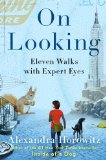
On Looking

On Looking: Eleven Walks with Expert Eyes by Alexandra Horowitz (Scribner, 2013)

(kindle ed.), (amazon.co.uk)

Book description from the publisher:

From the author of the giant #1 New York Times bestseller Inside of a Dog comes an equally smart, delightful, and startling exploration of how we perceive and discover our world.

Alexandra Horowitz’s brilliant On Looking: Eleven Walks with Expert Eyes shows us how to see the spectacle of the ordinary—to practice, as Sir Arthur Conan Doyle put it, “the observation of trifles.” On Looking is structured around a series of eleven walks the author takes, mostly in her Manhattan neighborhood, with experts on a diverse range of subjects, including an urban sociologist, the well-known artist Maira Kalman, a geologist, a physician, and a sound designer. She also walks with a child and a dog to see the world as they perceive it. What they see, how they see it, and why most of us do not see the same things reveal the startling power of human attention and the cognitive aspects of what it means to be an expert observer.

As the million-plus readers of Inside of a Dog have discovered, Alexandra Horowitz is charmingly adept at explaining the mysteries of human perception. Trained as a cognitive scientist, she discovers a feast of fascinating detail, all explained with her generous humor and self-deprecating tone. On Looking presents the same engaging combination, this time in service to understanding how human beings encounter their daily worlds and each other.

Page by page, Horowitz shows how much more there is to see—if only we would really look. On Looking is nutrition for the considered life, serving as a provocative response to our relentlessly virtual  consciousness. So turn off the phone and other electronic devices and be in the real world—where strangers communicate by geometry as they walk toward one another, where sounds reveal shadows, where posture can display humility, and the underside of a leaf unveils a Lilliputian universe—where, indeed, there are worlds within worlds within worlds.

Alexandra Horowitz’s On Looking confirms her place as one of today’s most illuminating observers of our infinitely complex world.

See also: Book website
Comments (0) - cognitive science,new books

new book – ‘The Artful Species: Aesthetics, Art, and Evolution’ by Stephen Davies

January 5, 2013

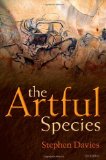
The Artful Species

The Artful Species: Aesthetics, Art, and Evolution by Stephen Davies (Oxford University Press, USA, 2013)

(amazon.co.uk)

Book description from the publisher:

The Artful Species explores the idea that our aesthetic responses and art behaviors are connected to our evolved human nature. Our humanoid forerunners displayed aesthetic sensibilities hundreds of thousands of years ago and the art standing of prehistoric cave paintings is virtually uncontested.

In Part One, Stephen Davies analyses the key concepts of the aesthetic, art, and evolution, and explores how they might be related. He considers a range of issues, including whether animals have aesthetic tastes and whether art is not only universal but cross-culturally comprehensible.

Part Two examines the many aesthetic interests humans take in animals and how these reflect our biological interests, and the idea that our environmental and landscape preferences are rooted in the experiences of our distant ancestors. In considering the controversial subject of human beauty, evolutionary psychologists have traditionally focused on female physical attractiveness in the context of mate selection, but Davies presents a broader view which decouples human beauty from mate choice and explains why it goes more with social performance and self-presentation.

Part Three asks if the arts, together or singly, are biological adaptations, incidental byproducts of nonart adaptations, or so removed from biology that they rate as purely cultural technologies. Davies does not conclusively support any one of the many positions considered here, but argues that there are grounds, nevertheless, for seeing art as part of human nature. Art serves as a powerful and complex signal of human fitness, and so cannot be incidental to biology. Indeed, aesthetic responses and art behaviors are the touchstones of our humanity.

See also: Author at PhilPapers

Comments (0) - culture,human evolution,new books

new book – ‘Myths of Happiness: What Should Make You Happy, but Doesn’t, What Shouldn’t Make You Happy, but Does’ by Sonja Lyubomirsky

January 4, 2013

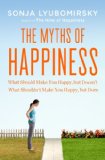
Myths of Happiness

The Myths of Happiness: What Should Make You Happy, but Doesn’t, What Shouldn’t Make You Happy, but Does by Sonja Lyubomirsky (Penguin, 2013)

(kindle.ed), (amazon.co.uk)

Book description from the publisher:

Happiness expert Sonja Lyubomirsky’s research-based lessons in how to find opportunity in life’s thorniest moments

In The Myths of Happiness, Sonja Lyubomirsky isolates the major turning points of adult life, looking to both achievements (marriage, children, professional satisfaction, wealth) and failures (singlehood, divorce, financial ruin, illness) to reveal that our misconceptions about the impact of such events is perhaps the greatest threat to our long-term well-being.

Lyubomirsky argues that we have been given false promises—myths that assure us that lifelong happiness will be attained once we hit the culturally confirmed markers of adult success. This restricted view of happiness works to discourage us from recognizing the upside of any negative life turn and blocks us from recognizing our own growth potential. Our outsized expectations transform natural rites of passage into emotional land mines and steer us to make toxic decisions, as The Myths of Happiness reveals.

Because we expect the best (or the worst) from life’s turning points, we shortsightedly place too much weight on our initial emotional responses. The Myths of Happiness empowers readers to look beyond their first response, sharing scientific evidence that often it is our mindset—not our circumstances—that matters. Central to these findings is the notion of hedonic adaptation, the fact that people are far more adaptable than they think. Even after a major life change—good or bad—we tend to return to our initial happiness level, forgetting what once made us elated or why we felt that life was so unbearable. The Myths of Happiness offers the perspective we need to make wiser choices, sharing how to slow the effects of this adaptation after a positive turn and find the way forward in a time of darkness.

In The Myths of Happiness, Sonja Lyubomirsky turns an empirical eye to the biggest, messiest moments, providing readers with the clear-eyed vision they need to build the healthiest, most satisfying life. A corrective course on happiness and a call to regard life’s twists and turns with a more open mind, The Myths of Happiness shares practical lessons with life-changing potential.

Google Books preview:

See also: Book website

Comments (0) - happiness,new books

new book – ‘Mastermind: How to Think Like Sherlock Holmes’ by Maria Konnikova

January 3, 2013

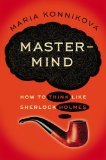
Mastermind

Mastermind: How to Think Like Sherlock Holmes by Maria Konnikova (Viking, 2013)

(kindle ed.),
(amazon.co.uk)

Book description from the publisher:

No fictional character is more renowned for his powers of thought and observation than Sherlock Holmes. But is his extraordinary intellect merely a gift of fiction, or can we learn to cultivate these abilities ourselves, to improve our lives at work and at home?

We can, says psychologist and journalist Maria Konnikova, and in Mastermind she shows us how. Beginning with the “brain attic”–Holmes’s metaphor for how we store information and organize knowledge–Konnikova unpacks the mental strategies that lead to clearer thinking and deeper insights. Drawing on twenty-first-century neuroscience and psychology, Mastermind explores Holmes’s unique methods of ever-present mindfulness, astute observation, and logical deduction.

In doing so, it shows how each of us, with some self-awareness and a little practice, can employ these same methods to sharpen our perceptions, solve difficult problems, and enhance our creative powers. For Holmes aficionados and casual readers alike, Konnikova reveals how the world’s most keen-eyed detective can serve as an unparalleled guide to upgrading the mind.

Google Books preview:

See also: Author’s website

Comments (0) - new books,psychology

new book – ‘To Sell Is Human: The Surprising Truth About Moving Others’ by Daniel H. Pink

January 1, 2013

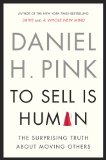
To Sell Is Human

To Sell Is Human: The Surprising Truth About Moving Others by Daniel H. Pink (Riverhead, 2012)

(kindle ed.), (amazon.co.uk – 7 Feb 2013)

Book description from the publisher:

From the bestselling author of Drive and A Whole New Mind comes a surprising–and surprisingly useful–new book that explores the power of selling in our lives.

According to the U.S. Bureau of Labor Statistics, one in nine Americans works in sales. Every day more than fifteen million people earn their keep by persuading someone else to make a purchase.

But dig deeper and a startling truth emerges:

Yes, one in nine Americans works in sales. But so do the other eight.

Whether we’re employees pitching colleagues on a new idea, entrepreneurs enticing funders to invest, or parents and teachers cajoling children to study, we spend our days trying to move others. Like it or not, we’re all in sales now.

To Sell Is Human offers a fresh look at the art and science of selling. As he did in Drive and A Whole New Mind, Daniel H. Pink draws on a rich trove of social science for his counterintuitive insights. He reveals the new ABCs of moving others (it’s no longer “Always Be Closing”), explains why extraverts don’t make the best salespeople, and shows how giving people an “off-ramp” for their actions can matter more than actually changing their minds.

Along the way, Pink describes the six successors to the elevator pitch, the three rules for understanding another’s perspective, the five frames that can make your message clearer and more persuasive, and much more. The result is a perceptive and practical book–one that will change how you see the world and transform what you do at work, at school, and at home.

Google Books preview:

See also: Author’s website

Comments (0) - new books,psychology