[ View menu ]

Archive for 'new books'

new book – ‘Drunk Tank Pink: And Other Unexpected Forces that Shape How We Think, Feel, and Behave’ by Adam Alter

March 25, 2013
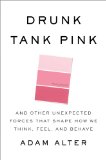
Drunk Tank Pink

Drunk Tank Pink: And Other Unexpected Forces that Shape How We Think, Feel, and Behave by Adam Alter (Penguin, 2013)

(kindle ed.), (amazon.co.uk)

An illuminating look at the way the thoughts we have and the decisions we make are influenced by forces that aren’t always in our control

Why are people named Kim, Kelly, and Ken more likely to donate to Hurricane Katrina victims than to Hurricane Rita victims? Are you really more likely to solve puzzles if you watch a light bulb illuminate? How did installing blue lights along a Japanese railway line halt rising crime and suicide rates? Can decorating your walls with the right artwork make you more honest? The human brain is fantastically complex, having engineered space travel and liberated nuclear energy, so it’s no wonder that we resist the idea that we’re deeply influenced by our surroundings. As profound as they are, these effects are almost impossible to detect both as they’re occurring and in hindsight. Drunk Tank Pink is the first detailed exploration of how our environment shapes what we think, how we feel, and the ways we behave.

The world is populated with words and images that prompt unexpected, unconscious decisions. We are so deeply attracted to our own initials that we give more willingly to the victims of hurricanes that match our initials: Kims and Kens donate more generously to Hurricane Katrina victims, whereas Rons and Rachels give more openly to Hurricane Rita victims. Meanwhile, an illuminated light bulb inspires creative thinking because it symbolizes insight.

Social interactions have similar effects, as professional cyclists pedal faster when people are watching. Teachers who took tea from the break room at Newcastle University contributed 300 percent more to a cash box when a picture of two eyes hung on the wall. We’re evolutionarily sensitive to human surveillance, so we behave more virtuously even if we’re only watched by a photograph. The physical environment, from locations to colors, also guides our hand in unseen ways. Dimly lit interiors metaphorically imply no one’s watching and encourage dishonesty and theft, while blue lights discourage violent activity because they’re associated with the police. Olympic taekwondo and judo athletes are more likely to win when they wear red rather than blue, because red makes them behave aggressively and referees see them as more dominant. Drunk Tank Pink is full of revelatory facts, riveting anecdotes, and cutting-edge experiments that collectively explain how the most unexpected factors lead us to think, feel, and behave the way we do.

See also: Author’s website
Comments (0) - new books,psychology

new book – ‘The Bonobo and the Atheist: In Search of Humanism Among the Primates’ by Frans de Waal

March 24, 2013

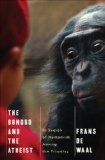
The Bonobo and the Atheist

The Bonobo and the Atheist: In Search of Humanism Among the Primates by Frans de Waal (W.W. Norton & Co., 2013)

(kindle ed.), (amazon.co.uk)

Book description from the publisher:

In this lively and illuminating discussion of his landmark research, esteemed primatologist Frans de Waal argues that human morality is not imposed from above but instead comes from within. Moral behavior does not begin and end with religion but is in fact a product of evolution.

For many years, de Waal has observed chimpanzees soothe distressed neighbors and bonobos share their food. Now he delivers fascinating fresh evidence for the seeds of ethical behavior in primate societies that further cements the case for the biological origins of human fairness. Interweaving vivid tales from the animal kingdom with thoughtful philosophical analysis, de Waal seeks a bottom-up explanation of morality that emphasizes our connection with animals. In doing so, de Waal explores for the first time the implications of his work for our understanding of modern religion. Whatever the role of religious moral imperatives, he sees it as a “Johnny-come-lately” role that emerged only as an addition to our natural instincts for cooperation and empathy.

But unlike the dogmatic neo-atheist of his book’s title, de Waal does not scorn religion per se. Instead, he draws on the long tradition of humanism exemplified by the painter Hieronymus Bosch and asks reflective readers to consider these issues from a positive perspective: What role, if any, does religion play for a well-functioning society today? And where can believers and nonbelievers alike find the inspiration to lead a good life?

Rich with cultural references and anecdotes of primate behavior, The Bonobo and the Atheist engagingly builds a unique argument grounded in evolutionary biology and moral philosophy. Ever a pioneering thinker, de Waal delivers a heartening and inclusive new perspective on human nature and our struggle to find purpose in our lives.

Google Books preview:

Comments (0) - human evolution,new books

new book – ‘Present Shock: When Everything Happens Now’ by Douglas Rushkoff

March 21, 2013

Present Shock

Present Shock: When Everything Happens Now by Douglas Rushkoff (Current/Penguin, 2013)

(kindle ed.), (amazon.co.uk)

Book description from the publisher:

“If the end of the twentieth century can be characterized by futurism, the twenty-first can be defined by presentism.”

This is the moment we’ve been waiting for, explains award-winning media theorist Douglas Rushkoff, but we don’t seem to have any time in which to live it. Instead we remain poised and frozen, overwhelmed by an always-on, live-streamed re­ality that our human bodies and minds can never truly in­habit. And our failure to do so has had wide-ranging effects on every aspect of our lives.

People spent the twentieth century obsessed with the future. We created technologies that would help connect us faster, gather news, map the planet, compile knowledge, and con­nect with anyone, at anytime. We strove for an instanta­neous network where time and space could be compressed.

Well, the future’s arrived. We live in a continuous now en­abled by Twitter, email, and a so-called real-time technologi­cal shift. Yet this “now” is an elusive goal that we can never quite reach. And the dissonance between our digital selves and our analog bodies has thrown us into a new state of anxiety: present shock.

Rushkoff weaves together seemingly disparate events and trends into a rich, nuanced portrait of how life in the eter­nal present has affected our biology, behavior, politics, and culture. He explains how the rise of zombie apocalypse fic­tion signals our intense desire for an ending; how the Tea Party and Occupy Wall Street form two sides of the same post-narrative coin; how corporate investing in the future has been replaced by futile efforts to game the stock market in real time; why social networks make people anxious and email can feel like an assault. He examines how the tragedy of 9/11 disconnected an entire generation from a sense of history, and delves into why conspiracy theories actually comfort us.

As both individuals and communities, we have a choice. We can struggle through the onslaught of information and play an eternal game of catch-up. Or we can choose to live in the present: favor eye contact over texting; quality over speed; and human quirks over digital perfection. Rushkoff offers hope for anyone seeking to transcend the false now.

Absorbing and thought-provoking, Present Shock is a wide-ranging, deeply thought meditation on what it means to be human in real time.

See also: Author’s website

Comments (0) - culture,new books,psychology

new book – ‘Pieces of Light: How the New Science of Memory Illuminates the Stories We Tell About Our Pasts’ by Charles Fernyhough

March 20, 2013

Pieces of Light

Pieces of Light: How the New Science of Memory Illuminates the Stories We Tell About Our Pasts by Charles Fernyhough (Harper, 2013)

(amazon.co.uk)

Book description from the publisher:

Leading psychologist Charles Fernyhough blends the most current science with literature and personal stories in Pieces of Light: How the New Science of Memory Illuminates the Stories We Tell About Our Pasts.

A new consensus is emerging among cognitive scientists: rather than possessing fixed, unchanging memories, they have found that we create recollections anew each time we are called upon to remember. According to psychologist Charles Fernyhough, remembering is an act of narrative imagination as much as it is the product of a neurological process.

An NPR and Psychology Today contributor, Dr. Fernyhough guides readers through the fascinating new science of autobiographical memory, covering topics such as: navigation, imagination, and the power of sense associations to cue remembering. Exquisitely written and meticulously researched, Pieces of Light brings together science and literature, the ordinary and the extraordinary, to help us better understand our powers of recall and our relationship with the past.

See also: Author’s website

Comments (0) - cognitive science,new books,psychology

new book – ‘Zig Zag: The Surprising Path to Greater Creativity’ by Keith Sawyer

March 19, 2013

Zig Zag

Zig Zag: The Surprising Path to Greater Creativity by Keith Sawyer (Jossey-Bass, 2013)

(kindle ed.), (amazon.co.uk)

Book description from the publisher:

A science-backed method to maximize creative potential in any sphere of life

With the prevalence of computer technology and outsourcing, new jobs and fulfilling lives will rely heavily on creativity and innovation. Keith Sawyer draws from his expansive research of the creative journey, exceptional creators, creative abilities, and world-changing innovations to create an accessible, eight-step program to increasing anyone’s creative potential. Sawyer reveals the surprising secrets of highly creative people (such as learning to ask better questions when faced with a problem), demonstrates how to come up with better ideas, and explains how to carry those ideas to fruition most effectively.

This science-backed, step-by step method can maximize our creative potential in any sphere of life.

  • Offers a proven method for developing new ideas and creative problem-solving no matter what your profession
  • Includes an eight-step method, 30 practices, and more than 100 techniques that can be launched at any point in a creative journey
  • Psychologist, jazz pianist, and author Keith Sawyer studied with world-famous creativity expert Mihaly Csikszentmihalyi

Sawyer’s book offers a wealth of easy to apply strategies and ideas for anyone who wants to tap into their creative power.

Google Books preview:

See also: Author’s blog

Comments (0) - new books,psychology