[ View menu ]

Archive for 'new books'

new book – ‘Mindvaults: Sociocultural Grounds for Pretending and Imagining’ by Radu J. Bogdan

April 18, 2013
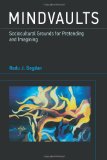
Mindvaults

Mindvaults: Sociocultural Grounds for Pretending and Imagining by Radu J. Bogdan (MIT Press, 2013)

(amazon.co.uk)

Book description from the publisher:

The human mind has the capacity to vault over the realm of current perception, motivation, emotion, and action, to leap — consciously and deliberately — to past or future, possible or impossible, abstract or concrete scenarios and situations. In this book, Radu Bogdan examines the roots of this uniquely human ability, which he terms “mindvaulting.” He focuses particularly on the capacities of pretending and imagining, which he identifies as the first forms of mindvaulting to develop in childhood. Pretending and imagining, Bogdan argues, are crucial steps on the ontogenetic staircase to the intellect. Bogdan finds that pretending and then imagining develop from a variety of sources for reasons that are specific and unique to human childhood. He argues that these capacities arise as responses to sociocultural and sociopolitical pressures that emerge at different stages of childhood. Bogdan argues that some of the properties of mindvaulting — including domain versatility and nonmodularity — resist standard evolutionary explanations. To resolve this puzzle, Bogdan reorients the evolutionary analysis toward human ontogeny, construed as a genuine space of evolution with specific pressures and adaptive responses. Bogdan finds that pretending is an ontogenetic response to sociocultural challenges in early childhood, a pre-adaptation for imagining; after age four, the adaptive response to cooperative and competitive sociopolitical pressures is a competence for mental strategizing that morphs into imagining.

Google Books preview:
Comments (0) - mind,new books,psychology

new book – ‘The Unpredictable Species: What Makes Humans Unique’ by Philip Lieberman

April 10, 2013

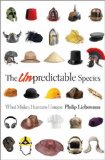
Unpredictable Species

The Unpredictable Species: What Makes Humans Unique by Philip Lieberman (Princeton University Press, 2013)

(amazon.co.uk)

Book description from the publisher:

The Unpredictable Species argues that the human brain evolved in a way that enhances our cognitive flexibility and capacity for innovation and imitation. In doing so, the book challenges the central claim of evolutionary psychology that we are locked into predictable patterns of behavior that were fixed by genes, and refutes the claim that language is innate. Philip Lieberman builds his case with evidence from neuroscience, genetics, and physical anthropology, showing how our basal ganglia–structures deep within the brain whose origins predate the dinosaurs–came to play a key role in human creativity. He demonstrates how the transfer of information in these structures was enhanced by genetic mutation and evolution, giving rise to supercharged neural circuits linking activity in different parts of the brain. Human invention, expressed in different epochs and locales in the form of stone tools, digital computers, new art forms, complex civilizations–even the latest fashions–stems from these supercharged circuits.

The Unpredictable Species boldly upends scientifically controversial yet popular beliefs about how our brains actually work. Along the way, this compelling book provides insights into a host of topics related to human cognition, including associative learning, epigenetics, the skills required to be a samurai, and the causes of cognitive confusion on Mount Everest and of Parkinson’s disease.

See also: Publisher’s webpage, with link to Chapter 1 pdf

Comments (0) - cognitive science,human evolution,language,new books

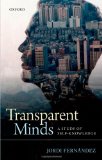
new book – ‘Transparent Minds: A Study of Self-Knowledge’ by Jordi Fernandez

March 30, 2013

Transparent Minds

Transparent Minds: A Study of Self-Knowledge by Jordi Fernandez (Oxford University Press, USA, 2013)

(amazon.co.uk)

Book description from the publisher:

We all seem to be capable of telling what our current states of mind are. At any given moment, we know, for example, what we believe, and what we want. But how do we know that? In Transparent Minds, Jordi Fernandez explains our knowledge of our own propositional attitudes. Drawing on the so-called “transparency” of belief, he proposes that we attribute beliefs and desires to ourselves based on our grounds for those beliefs and desires. The book argues that this view explains our privileged access to those propositional attitudes. Three applications are drawn from the model of self-knowledge that emerges: a solution to Moore’s paradox, an account of the thought-insertion delusion, and an explanation of self-deception. The puzzles raised by all three phenomena can be resolved, Fernandez argues, if we construe them as failures of self-knowledge. The resulting picture of self-knowledge challenges the traditional notion that it is a matter of introspection. For the main tenet of Transparent Minds is that we come to know what we believe and desire by “looking outward,” and attending to the states of affairs which those beliefs and desires are about.

See also: Author’s website

Comments (0) - consciousness,new books,philosophy of mind

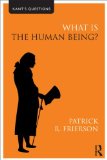
new book – ‘What Is the Human Being? (Kant’s Questions)’ by Patrick R. Frierson

March 28, 2013

What Is the Human Being?

What is the Human Being? (Kant’s Questions) by Patrick R. Frierson (Routledge, 2013)

(kindle ed.), (amazon.co.uk)

Book description from the publisher:

Philosophers, anthropologists and biologists have long puzzled over the question of human nature. It is also a question that Kant thought about deeply and returned to in many of his writings. In this lucid and wide-ranging introduction to Kant’s philosophy of human nature – which is essential for understanding his thought as a whole – Patrick R. Frierson assesses Kant’s theories and examines his critics.

He begins by explaining how Kant articulates three ways of addressing the question ‘what is the human being?’: the transcendental, the empirical, and the pragmatic. He then considers some of the great theorists of human nature who wrestle with Kant’s views, such as Hegel, Marx, Darwin, Nietzsche, and Freud; contemporary thinkers such as E.O.Wilson and Daniel Dennett, who have sought biological explanations of human nature; Thomas Kuhn, Michel Foucault, and Clifford Geertz, who emphasize the diversity of human beings in different times and places; and existentialist philosophers such as Sartre and Heidegger.

He argues that whilst these approaches challenge and enrich Kant’s views in significant ways, all suffer from serious weaknesses that Kant’s anthropology can address. Taking a core insight of Kant’s – that human beings are fundamentally free but finite – he argues that it is the existentialists, particularly Sartre, who are the most direct heirs of his transcendental anthropology.

The final part of the book is an extremely helpful overview of the work of contemporary philosophers, particularly Christine Korsgaard and Jürgen Habermas. Patrick R. Frierson explains how these philosophers engage with questions of naturalism, historicism, and existentialism while developing Kantian conceptions of the human being.

Including chapter summaries and annotated further reading, What is the Human Being? is an outstanding introduction to some fundamental aspects of Kant’s thought and a judicious assessment of leading theories of human nature. It is essential reading for all students of Kant and the philosophy of human nature, as well as those in related disciplines such as anthropology, politics and sociology.

Comments (0) - new books

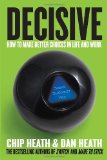
new book ‘ Decisive: How to Make Better Choices in Life and Work’ by Chip Heath and Dan Heath

March 26, 2013

Decisive

Decisive: How to Make Better Choices in Life and Work by Chip Heath and Dan Heath (Crown Business, 2013)

(kindle ed.), (amazon.co.uk)

Chip and Dan Heath, the bestselling authors of Switch and Made to Stick, tackle one of the most critical topics in our work and personal lives: how to make better decisions.

Research in psychology has revealed that our decisions are disrupted by an array of biases and irrationalities: We’re overconfident. We seek out information that supports us and downplay information that doesn’t. We get distracted by short-term emotions. When it comes to making choices, it seems, our brains are flawed instruments. Unfortunately, merely being aware of these shortcomings doesn’t fix the problem, any more than knowing that we are nearsighted helps us to see. The real question is: How can we do better?

In Decisive, the Heaths, based on an exhaustive study of the decision-making literature, introduce a four-step process designed to counteract these biases. Written in an engaging and compulsively readable style, Decisive takes readers on an unforgettable journey, from a rock star’s ingenious decision-making trick to a CEO’s disastrous acquisition, to a single question that can often resolve thorny personal decisions.

Along the way, we learn the answers to critical questions like these: How can we stop the cycle of agonizing over our decisions? How can we make group decisions without destructive politics? And how can we ensure that we don’t overlook precious opportunities to change our course?

   Decisive is the Heath brothers’ most powerful—and important—book yet, offering fresh strategies and practical tools enabling us to make better choices. Because the right decision, at the right moment, can make all the difference.

See also: Authors’ website

Comments (0) - new books,psychology