October 19, 2011
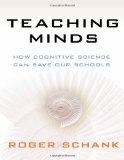
Teaching Minds: How Cognitive Science Can Save Our Schools by Roger Schank (Teachers College Press, 2011)
(amazon.co.uk)
Product description from the publisher:
From grade school to graduate school, from the poorest public institutions to the most affluent private ones, our educational system is failing students. In his provocative new book, cognitive scientist and bestselling author Roger Schank argues that class size, lack of parental involvement, and other commonly-cited factors have nothing to do with why students are not learning. The culprit is a system of subject-based instruction and the solution is cognitive-based learning. This groundbreaking book defines what it would mean to teach thinking. The time is now for schools to start teaching minds!
See also: Author’s website
Comments (0)
- cognitive science,culture,mind,new books
October 18, 2011
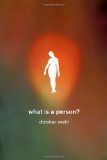
What Is a Person?: Rethinking Humanity, Social Life, and the Moral Good from the Person Up by Christian Smith (University of Chicago Press, 2010) is only $4.75 for the Kindle edition (US). (Prices are subject to change at any time, so check before you click!)
Product description from the publisher:
What is a person? This fundamental question is a perennial concern of philosophers and theologians. But, Christian Smith here argues, it also lies at the center of the social scientist’s quest to interpret and explain social life. In this ambitious book, Smith presents a new model for social theory that does justice to the best of our humanistic visions of people, life, and society.
Finding much current thinking on personhood to be confusing or misleading, Smith finds inspiration in critical realism and personalism. Drawing on these ideas, he constructs a theory of personhood that forges a middle path between the extremes of positivist science and relativism. Smith then builds on the work of Pierre Bourdieu, Anthony Giddens, and William Sewell to demonstrate the importance of personhood to our understanding of social structures. From there he broadens his scope to consider how we can know what is good in personal and social life and what sociology can tell us about human rights and dignity.
Innovative, critical, and constructive, What Is a Person? offers an inspiring vision of a social science committed to pursuing causal explanations, interpretive understanding, and general knowledge in the service of truth and the moral good.
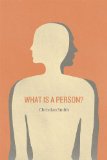
The paperback edition is due out on October 30.
Comments (0)
- new books,self
October 16, 2011
Meditating Selflessly: Practical Neural Zen by James H. Austin (MIT Press, 2011)
(amazon.co.uk – 4 Nov)
Product description from the publisher:
This is not the usual kind of self-help book. Indeed, its major premise heeds a Zen master’s advice to be less self-centered. Yes, it is “one more book of words about Zen,” as the author concedes, yet this book explains meditative practices from the perspective of a “neural Zen.” The latest findings in brain research inform its suggestions. In Meditating Selflessly, James Austin–Zen practitioner, neurologist, and author of three acclaimed books on Zen and neuroscience–guides readers toward that open awareness already awaiting them on the cushion and in the natural world. Austin offers concrete advice–often in a simplified question-and-answer format–about different ways to meditate. He clarifies both the concentrative and receptive styles of meditation. Having emphasized that top-down and bottom-up forms of attention are complementary, he then explains how long-term meditators can become increasingly selfless when they cultivate both styles of attention in a balanced manner. This, Austin explains, is because our networks of attention are normally engaged in an inverse, reciprocal, seesaw relationship with the different regions that represent our autobiographical self. Drawing widely from the exciting new field of contemplative neuroscience, Austin helps resolve an ancient paradox: why both insight wisdom and selflessness arise simultaneously during enlightened states of consciousness.
Comments (0)
- consciousness,meditation,new books,self
October 12, 2011
A Case for Irony (Tanner Lectures on Human Values) by Jonathan Lear (Harvard University Press, 2011)
(amazon.co.uk – 11 Nov)
Product description from the publisher:
In 2001, Vanity Fair declared that the Age of Irony was over. Joan Didion has lamented that the United States in the era of Barack Obama has become an “irony-free zone.” Jonathan Lear in his 2006 book Radical Hope looked into America’s heart to ask how might we dispose ourselves if we came to feel our way of life was coming to an end. Here, he mobilizes a squad of philosophers and a psychoanalyst to once again forge a radical way forward, by arguing that no genuinely human life is possible without irony.
Becoming human should not be taken for granted, Lear writes. It is something we accomplish, something we get the hang of, and like Kierkegaard and Plato, Lear claims that irony is one of the essential tools we use to do this. For Lear and the participants in his Socratic dialogue, irony is not about being cool and detached like a player in a Woody Allen film. That, as Johannes Climacus, one of Kierkegaard’s pseudonymous authors, puts it, “is something only assistant professors assume.” Instead, it is a renewed commitment to living seriously, to experiencing every disruption that shakes us out of our habitual ways of tuning out of life, with all its vicissitudes. While many over the centuries have argued differently, Lear claims that our feelings and desires tend toward order, a structure that irony shakes us into seeing. Lear’s exchanges with his interlocutors strengthen his claims, while his experiences as a practicing psychoanalyst bring an emotionally gripping dimension to what is at stake—the psychic costs and benefits of living with irony.
Google Books preview:
Comments (0)
- new books,psychology
October 7, 2011
Books: A Living History by Martyn Lyons (J Paul Getty Museum) – 170 color and 50 b/w illustrations
(amazon.co.uk)
Product description from the publisher:
From the first scribbling on papyrus to the emergence of the e-book, this wide-ranging overview of the history of the book provides a fascinating look at one of the most efficient, versatile, and enduring technologies ever developed. The author traces the evolution of the book from the rarefied world of the hand-copied and illuminated volume in ancient and medieval times, through the revolutionary impact of Gutenberg’s invention of the printing press, to the rise of a publishing culture in the nineteenth and twentieth centuries, and the subsequent impact of new technologies on this culture.
Many of the great individual titles of the past two millennia are discussed as well as the range of book types and formats that have emerged in the last few hundred years, from serial and dime novels to paperbacks, children’s books, and Japanese manga. The volume ends with a discussion of the digital revolution in book production and distribution and the ramifications for book lovers, who can’t help but wonder whether the book will thrive—or even survive—in a form they recognize.
Comments (2)
- culture,new books