Whether it’s in a cockpit at takeoff or the planning of an offensive war, a romantic relationship or a dispute at the office, there are many opportunities to lie and self-deceive—but deceit and self-deception carry the costs of being alienated from reality and can lead to disaster. So why does deception play such a prominent role in our everyday lives? In short, why do we deceive?
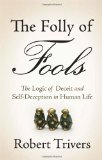
In his bold new work, prominent biological theorist Robert Trivers unflinchingly argues that self-deception evolved in the service of deceit—the better to fool others. We do it for biological reasons—in order to help us survive and procreate. From viruses mimicking host behavior to humans misremembering (sometimes intentionally) the details of a quarrel, science has proven that the deceptive one can always outwit the masses. But we undertake this deception at our own peril.
Trivers has written an ambitious investigation into the evolutionary logic of lying and the costs of leaving it unchecked.
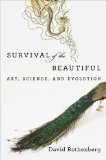
“The peacock’s tail,” said Charles Darwin, “makes me sick.” That’s because the theory of evolution as adaptation can’t explain why nature is so beautiful. It took the concept of sexual selection for Darwin to explain that, a process that has more to do with aesthetics than the practical. Survival of the Beautiful is a revolutionary new examination of the interplay of beauty, art, and culture in evolution. Taking inspiration from Darwin’s observation that animals have a natural aesthetic sense, philosopher and musician David Rothenberg probes why animals, humans included, have innate appreciation for beauty-and why nature is, indeed, beautiful.
Sexual selection may explain why animals desire, but it says very little about what they desire. Why will a bowerbird literally murder another bird to decorate its bower with the victim’s blue feathers? Why do butterfly wings boast such brilliantly varied patterns? The beauty of nature is not arbitrary, even if random mutation has played a role in evolution. What can we learn from the amazing range of animal aesthetic behavior-about animals, and about ourselves?
Readers who enjoyed the bestsellers The Art Instinct and The Mind’s Eye will find Survival of the Beautiful an equally stimulating and profound exploration of art, science, and the creative impulse.
Daniel Kahneman, recipient of the Nobel Prize in Economic Sciences for his seminal work in psychology that challenged the rational model of judgment and decision making, is one of our most important thinkers. His ideas have had a profound and widely regarded impact on many fields—including economics, medicine, and politics—but until now, he has never brought together his many years of research and thinking in one book.
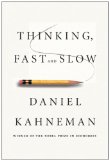
In the highly anticipated Thinking, Fast and Slow, Kahneman takes us on a groundbreaking tour of the mind and explains the two systems that drive the way we think. System 1 is fast, intuitive, and emotional; System 2 is slower, more deliberative, and more logical. Kahneman exposes the extraordinary capabilities—and also the faults and biases—of fast thinking, and reveals the pervasive influence of intuitive impressions on our thoughts and behavior. The impact of loss aversion and overconfidence on corporate strategies, the difficulties of predicting what will make us happy in the future, the challenges of properly framing risks at work and at home, the profound effect of cognitive biases on everything from playing the stock market to planning the next vacation—each of these can be understood only by knowing how the two systems work together to shape our judgments and decisions.
Engaging the reader in a lively conversation about how we think, Kahneman reveals where we can and cannot trust our intuitions and how we can tap into the benefits of slow thinking. He offers practical and enlightening insights into how choices are made in both our business and our personal lives—and how we can use different techniques to guard against the mental glitches that often get us into trouble. Thinking, Fast and Slow will transform the way you think about thinking.
The origin, development, and nature of language has been the focus of theoretical debate among philosophers for many centuries. Following the pioneering clinical observations 150 years ago of loss of language following a cerebral lesion, language started to be considered a biological system, that could be investigated scientifically. As a consequence, an increasing number of scientists began to search for its anatomical and functional basis and its links with other such cognitive systems. The relatively recent introduction of neuroimaging tools, such as PET and fMRI, has brought rapid and groundbreaking developments to the field of Neurolinguistics.
In this book, Denes harnesses these advances to adopt a biolinguistic approach to the study of a subject that increasingly sees the collaboration of linguists, experimental psychologists, neuroscientists and clinicians. Talking Heads reviews the latest research to provide a concise analysis of the multifaceted aspects of language which focuses both on theoretical aspects and physical implementation.
Following an up-to-date description of acquired language disorders, and their contribution to the design of a functional architecture of language, the book illustrates the neurological process involved in the production and comprehension of spoken and written language, as well as investigating the neurological and functional systems responsible for sign language production and first and second language acquisition.
With a glossary of the anatomical and linguistic terms, this book provides an invaluable resource to undergraduate and graduate students of psychology, psycholinguistics and linguistics.
Principles of right and wrong guide the lives of almost all human beings, but we often see them as external to ourselves, outside our own control. In a revolutionary approach to the problems of moral philosophy, Philip Kitcher makes a provocative proposal: Instead of conceiving ethical commands as divine revelations or as the discoveries of brilliant thinkers, we should see our ethical practices as evolving over tens of thousands of years, as members of our species have worked out how to live together and prosper. Elaborating this radical new vision, Kitcher shows how the limited altruistic tendencies of our ancestors enabled a fragile social life, how our forebears learned to regulate their interactions with one another, and how human societies eventually grew into forms of previously unimaginable complexity. The most successful of the many millennia-old experiments in how to live, he contends, survive in our values today.
Drawing on natural science, social science, and philosophy to develop an approach he calls “pragmatic naturalism,” Kitcher reveals the power of an evolving ethics built around a few core principles—including justice and cooperation—but leaving room for a diversity of communities and modes of self-expression. Ethics emerges as a beautifully human phenomenon—permanently unfinished, collectively refined and distorted generation by generation. Our human values, Kitcher shows, can be understood not as a final system but as a project—the ethical project—in which our species has engaged for most of its history, and which has been central to who we are.