[ View menu ]

Archive for 'new books'

new book – ‘The Traveler, the Tower, and the Worm: The Reader as Metaphor’ by Alberto Manguel

July 25, 2013

The Traveler, the Tower and the Worm

The Traveler, the Tower, and the Worm: The Reader as Metaphor (Material Texts) by Alberto Manguel (University of Pennsylvania Press, 2013)
 
(kindle ed.), (amazon.co.uk)


As far as one can tell, human beings are the only species for which the world seems made up of stories, Alberto Manguel writes. We read the book of the world in many guises: we may be travelers, advancing through its pages like pilgrims heading toward enlightenment. We may be recluses, withdrawing through our reading into our own ivory towers. Or we may devour our books like burrowing worms, not to benefit from the wisdom they contain but merely to stuff ourselves with countless words.

With consummate grace and extraordinary breadth, the best-selling author of A History of Reading and The Library at Night considers the chain of metaphors that have described readers and their relationships to the text-that-is-the-world over a span of four millennia. In figures as familiar and diverse as the book-addled Don Quixote and the pilgrim Dante who carries us through the depths of hell up to the brilliance of heaven, as well as Prince Hamlet paralyzed by his learning, and Emma Bovary who mistakes what she has read for the life she might one day lead, Manguel charts the ways in which literary characters and their interpretations reflect both shifting attitudes toward readers and reading, and certain recurrent notions on the role of the intellectual: “We are reading creatures. We ingest words, we are made of words. . . . It is through words that we identify our reality and by means of words that we ourselves are identified.”

See also: Author’s website
Comments (0) - new books,reading

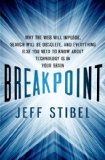
new book – ‘Breakpoint: Why the Web Will Implode, Search Will be Obsolete, and Everything Else You Need to Know About Technology Is in Your Brain’ by Jeff Stibel

July 23, 2013

Breakpoint

Breakpoint: Why the Web Will Implode, Search Will be Obsolete, and Everything Else You Need to Know about Technology Is in Your Brain by Jeff Stibel (Palgrave Macmillan, 2013)

(kindle ed.), (amazon.co.uk)

Book description from the publisher:

We are living in a world in which cows send texts to farmers when they’re in heat, where the most valuable real estate in New York City houses computers, not people, and some of humanity’s greatest works are created by crowds, not individuals.

We are in the midst of a networking revolution–set to transform the way we access the world’s information and the way we connect with one another. Studying biological systems is perhaps the best way to understand such networks, and nature has a lesson for us if we care to listen: bigger is rarely better in the long run. The deadliest creature is the mosquito, not the lion. It is the quality of a network that is important for survival, not the size, and all networks–the human brain, Facebook, Google, even the internet itself–eventually reach a breakpoint and collapse. That’s the bad news. The good news is that reaching a breakpoint can be a step forward, allowing a network to substitute quality for quantity.

In Breakpoint, brain scientist and entrepreneur Jeff Stibel takes readers to the intersection of the brain, biology, and technology. He shows how exceptional companies are using their understanding of the internet’s brain-like powers to create a competitive advantage by building more effective websites, utilizing cloud computing, engaging social media, monetizing effectively, and leveraging a collective consciousness. Indeed, the result of these technologies is a more tightly connected world with capabilities far beyond the sum of our individual minds. Breakpoint offers a fresh and exciting perspective about the future of technology and its effects on all of us.

See also: Author’s website, Book website

Comments (0) - culture,new books

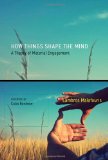
new book – ‘How Things Shape the Mind: A Theory of Material Engagement’ by Lambros Malafouris

July 21, 2013

How Things Shape the Mind

How Things Shape the Mind: A Theory of Material Engagement by Lambros Malafouris (MIT Press, 2013)

(amazon.co.uk)

Book description from the publisher:

An increasingly influential school of thought in cognitive science views the mind as embodied, extended, and distributed, rather than brain-bound, “all in the head.” This shift in perspective raises important questions about the relationship between cognition and material culture, posing major challenges for philosophy, cognitive science, archaeology, and anthropology. In How Things Shape the Mind, Lambros Malafouris proposes a cross-disciplinary analytical framework for investigating the different ways in which things have become cognitive extensions of the human body. Using a variety of examples and case studies, he considers how those ways might have changed from earliest prehistory to the present. Malafouris’s Material Engagement Theory adds materiality — the world of things, artifacts, and material signs — into the cognitive equation definitively. His account not only questions conventional intuitions about the boundaries and location of the human mind but also suggests that we rethink classical archaeological assumptions about human cognitive evolution.

Arguing that the understanding of human cognition is essentially interlocked with the study of the technical mediations that constitute the central nodes of a materially extended and distributed human mind, Malafouris offers a series of archaeological and anthropological case studies — from Stone Age tools to the modern potter’s wheel — to test his theory. How do things shape the mind? Considering the implications of the seemingly uniquely human predisposition to reconfigure our bodies and our senses by using tools and material culture, Malafouris adds a fresh perspective on a foundational issue in the study of human cognition.

See also: Author’s webpage

Comments (1) - cognitive science,culture,new books

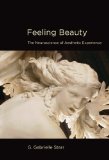
new book – ‘Feeling Beauty: The Neuroscience of Aesthetic Experience’ by G. Gabrielle Starr

July 20, 2013

Feeling Beauty

Feeling Beauty: The Neuroscience of Aesthetic Experience by G. Gabrielle Starr (MIT Press, 2013)

(amazon.co.uk)

Book description from the publisher:

In Feeling Beauty, G. Gabrielle Starr argues that understanding the neural underpinnings of aesthetic experience can reshape our conceptions of aesthetics and the arts. Drawing on the tools of both cognitive neuroscience and traditional humanist inquiry, Starr shows that neuroaesthetics offers a new model for understanding the dynamic and changing features of aesthetic life, the relationships among the arts, and how individual differences in aesthetic judgment shape the varieties of aesthetic experience.

Starr, a scholar of the humanities and a researcher in the neuroscience of aesthetics, proposes that aesthetic experience relies on a distributed neural architecture — a set of brain areas involved in emotion, perception, imagery, memory, and language. More important, it emerges from networked interactions, intricately connected and coordinated brain systems that together form a flexible architecture enabling us to develop new arts and to see the world around us differently. Focusing on the “sister arts” of poetry, painting, and music, Starr builds and tests a neural model of aesthetic experience valid across all the arts. Asking why works that address different senses using different means seem to produce the same set of feelings, she examines particular works of art in a range of media, including a poem by Keats, a painting by van Gogh, a sculpture by Bernini, and Beethoven’s Diabelli Variations. Starr’s innovative, interdisciplinary analysis is true to the complexities of both the physical instantiation of aesthetics and the realities of artistic representation.

See also: Author’s webpage (with links to publications)

Comments (0) - cognitive science,culture,new books

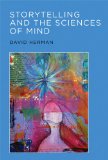
new book – ‘Storytelling and the Sciences of Mind’ by David Herman

July 17, 2013

Storytelling and the Sciences of Mind

Storytelling and the Sciences of Mind by David Herman (MIT Press, 2013)

(amazon.co.uk)

Book description from the publisher:

With Storytelling and the Science of Mind, David Herman proposes a cross-fertilization between the study of narrative and research on intelligent behavior. This cross-fertilization goes beyond the simple importing of ideas from the sciences of mind into scholarship on narrative and instead aims for convergence between work in narrative studies and research in the cognitive sciences. The book as a whole centers on two questions: How do people make sense of stories? And: How do people use stories to make sense of the world? Examining narratives from different periods and across multiple media and genres, Herman shows how traditions of narrative research can help shape ways of formulating and addressing questions about intelligent activity, and vice versa.

Using case studies that range from Robert Louis Stevenson’s Dr Jekyll and Mr Hyde to sequences from The Incredible Hulk comics to narratives told in everyday interaction, Herman considers storytelling both as a target for interpretation and as a resource for making sense of experience itself. In doing so, he puts ideas from narrative scholarship into dialogue with such fields as psycholinguistics, philosophy of mind, and cognitive, social, and ecological psychology. After exploring ways in which interpreters of stories can use textual cues to build narrative worlds, or storyworlds, Herman investigates how this process of narrative worldmaking in turn supports efforts to understand — and engage with — the conduct of persons, among other aspects of lived experience.

Comments (0) - cognitive science,new books