[ View menu ]

Archive for 'new books'

new book – ‘When: The Art of Perfect Timing’ by Stuart Albert

August 10, 2013
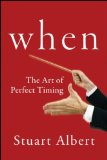
When

When: The Art of Perfect Timing by Stuart Albert (Jossey-Bass, 2013)

(kindle ed.), (amazon.co.uk)

Book description from the publisher:

An elegant and counterintuitive guide to achieving perfect timing
Timing is everything. Whether we are making strategic business decisions or the smallest personal choice, we must decide not only what to do, but when to do it. Act too early—or too late—and the results can be disastrous. Based on a 20-year investigation into more than 2,000 timing issues and errors, When presents a single and practical approach for dealing with timing in life and business. Good timing, Albert argues, is not just a matter of luck, intuition, or past experience—all of which may be unreliable—but a skill. He describes that skill and details the tools and methods needed to conduct a successful timing analysis.

  • The book is the first to offer an efficient and comprehensive way to think through any timing issue
  • Filled with dozens of lively stories illustrating good and bad timing in all walks of life—business, warfare, medicine, sports, entertainment and the arts
  • Written by Stuart Albert, one of the foremost timing experts in the world and developer of the first practical, research-based method for turning the skill of timing into a competitive advantage

Engaging and counterintuitive, When will show everyone, regardless of the work they do, or the life they live, that “it’s all in the timing.”

See also:
When – excerpt (pdf of Chapter 1) from publisher’s website
Comments (0) - new books,psychology,Uncategorized

new book – ‘How To Like Everything: A Utopia’ by Paul Shepheard

August 3, 2013

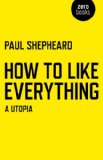
How To Like Everything

How To Like Everything: A Utopia by Paul Shepheard (Zero Books, 2013)

(kindle ed.), (amazon.co.uk)

Book description from the publisher:

How To Like Everything is a utopia. ‘Utopia’ is a word invented five hundred years ago at the start of the modern age as a description of the ideal society. It’s composed of Latin parts that taken together mean ‘no place’ or ‘nowhere’. We now use the word utopia to mean an impossible dream of perfection. How To Like Everything recasts the actual world, the forever-changing world we live in, as utopia: to make the impossible possible. This is not a dry academic debate. Paul Shepheard takes on his subject by threading questions, evidence and logic through hilarious, moving and thought-provoking stories. The action is set in the complicated city of Amsterdam, where he gets stuck in the briars of love affairs, existential decisions and conflicts with complete strangers. And the philosophy? He is a materialist. His utopia hinges on the question of whether there can be anything other than the present moment.

See also: Author’s website

Comments (0) - culture,new books,reality

new book – ‘Falling into the Fire: A Psychiatrist’s Encounters with the Mind in Crisis’ by Christine Montross

August 1, 2013

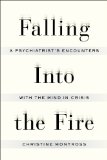
Falling into the Fire

One of Amazon’s Best Books of the Month: Nonfiction for August:

Falling Into the Fire: A Psychiatrist’s Encounters with the Mind in Crisis by Christine Montross (Penguin, 2013)

(kindle ed.), (amazon.co.uk)

Book description from the publisher:

Falling Into the Fire is psychiatrist Christine Montross’s thoughtful investigation of the gripping patient encounters that have challenged and deepened her practice. The majority of the patients Montross treats in Falling Into the Fire are seen in the locked inpatient wards of a psychiatric hospital; all are in moments of profound crisis. We meet a young woman who habitually commits self-injury, having ingested light bulbs, a box of nails, and a steak knife, among other objects. Her repeated visits to the hospital incite the frustration of the staff, leading Montross to examine how emotion can interfere with proper care. A recent college graduate, dressed in a tunic and declaring that love emanates from everything around him, is brought to the ER by his concerned girlfriend. Is it ecstasy or psychosis? What legal ability do doctors have to hospitalize—and sometimes medicate—a patient against his will? A new mother is admitted with incessant visions of harming her child. Is she psychotic and a danger or does she suffer from obsessive thoughts? Her course of treatment—and her child’s future—depends upon whether she receives the correct diagnosis.

Each case study presents its own line of inquiry, leading Montross to seek relevant psychiatric knowledge from diverse sources. A doctor of uncommon curiosity and compassion, Montross discovers lessons in medieval dancing plagues, in leading forensic and neurological research, and in moments from her own life. Beautifully written, deeply felt, Falling Into the Fire brings us inside the doctor’s mind, illuminating the grave human costs of mental illness as well as the challenges of diagnosis and treatment.

Throughout, Montross confronts the larger question of psychiatry: What is to be done when a patient’s experiences cannot be accounted for, or helped, by what contemporary medicine knows about the brain? When all else fails, Montross finds, what remains is the capacity to abide, to sit with the desperate in their darkest moments. At once rigorous and meditative, Falling Into the Fire is an intimate portrait of psychiatry, allowing the reader to witness the humanity of the practice and the enduring mysteries of the mind.

Google Books preview:

See also: Author’s website

Comments (0) - new books,psychology

new book – ‘You Are Now Less Dumb: How to Conquer Mob Mentality, How to Buy Happiness, and All the Other Ways to Outsmart Yourself’ by David McRaney

July 30, 2013

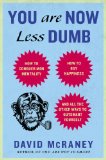
You Are Now Less Dumb

You Are Now Less Dumb: How to Conquer Mob Mentality, How to Buy Happiness, and All the Other Ways to Outsmart Yourself by David McRaney (Gotham, 2013)

(kindle ed.), (amazon.co.uk)

Book description from the publisher:

The author of the bestselling You Are Not So Smart shares more discoveries about self-delusion and irrational thinking, and gives readers a fighting chance at outsmarting their not-so-smart brains

David McRaney’s first book, You Are Not So Smart, evolved from his wildly popular blog of the same name. A mix of popular psychology and trivia, McRaney’s insights have struck a chord with thousands, and his blog—and now podcasts and videos—have become an Internet phenomenon.

Like You Are Not So Smart, You Are Now Less Dumb is grounded in the idea that we all believe ourselves to be objective observers of reality—except we’re not. But that’s okay, because our delusions keep us sane. Expanding on this premise, McRaney provides eye-opening analyses of fifteen more ways we fool ourselves every day, including:

  • The Misattribution of Arousal (Environmental factors have a greater effect on our emotional arousal than the person right in front of us)
  • Sunk Cost Fallacy (We will engage in something we don’t enjoy just to make the time or money already invested “worth it”)
  • Deindividuation (Despite our best intentions, we practically disappear when subsumed by a mob mentality)

McRaney also reveals the true price of happiness, why Benjamin Franklin was such a badass, and how to avoid falling for our own lies. This smart and highly entertaining book will be wowing readers for years to come.

Google Books preview:

See also: Author’s blog (You Are Not So Smart)

Comments (0) - cognitive science,new books,psychology

new book – ‘Exploring the Illusion of Free Will and Responsibility,’ ed. by Gregg D. Caruso

July 28, 2013

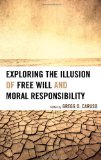
Explruing the Illusion of Free Will and Responsibility

Exploring the Illusion of Free Will and Moral Responsibility, ed. by Gregg D. Caruso (Lexington Books, 2013)

(kindle ed.), (amazon.co.uk)

Book description from the publisher:

This book explores the philosophical and scientific arguments for free will skepticism and their implications. Skepticism about free will and moral responsibility has been on the rise in recent years. In fact, a significant number of philosophers, psychologists, and neuroscientists now either doubt or outright deny the existence of free will and/or moral responsibility—and the list of prominent skeptics appears to grow by the day. Given the profound importance that the concepts of free will and moral responsibility play in our lives—in understanding ourselves, society, and the law—it is important that we explore what is behind this new wave of skepticism. It is also important that we explore the potential consequences of skepticism for ourselves and society. This edited collection of new essays brings together an internationally recognized line-up of contributors, most of whom hold skeptical positions of some sort, to display and explore the leading arguments for free will skepticism and to debate their implications. It includes original contributions by Susan Blackmore, Thomas W. Clark, Mark Hallett, John-Dylan Haynes and Michael Pauen, Ted Honderich, Neil Levy, Thomas Nadelhoffer and Daniela Goya Tocchetto, Shaun Nichols, Derk Pereboom, Susan Pockett, Maureen Sie, Saul Smilansky, Galen Strawson, Manuel Vargas, Benjamin Vilhauer, and Bruce Waller.

Google Books preview:

See also: Gregg Caruso’s website

Comments (1) - new books