August 29, 2011
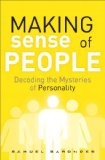
Making Sense of People: Decoding the Mysteries of Personality (FT Press Science) by Samuel Barondes only recently came out in hardcover, but is now being offered as a free Kindle ebook. Be sure to check the price before purchasing, as it could change at any time.
Product description from the publisher:
Leading neuroscientist Samuel Barondes shares scientific frameworks and tools for improving your intuitions about people, and sizing them up more consciously, systematically, and successfully. He shows how to use the latest research about personality and character to get along better, choose great friends, decide whom to trust, and avoid narcissists and sociopaths.
Comments (0)
- new books,psychology
August 28, 2011
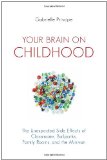
Your Brain on Childhood: The Unexpected Side Effects of Classrooms, Ballparks, Family Rooms, and the Minivan by Gabrielle Principe (Prometheus Books, 2011)
(amazon.co.uk)
Book description from the publisher:
For more than 99 percent of human existence childhood was spent in a natural environment. Children spent their days roaming in packs and playing on their own in the out-of-doors. They improvised their play, invented games, and made up their own rules. Education was informal and new skills were learned through interacting with peers and encountering the natural world.
Today, infants find themselves strapped into bouncy seats and plunked in front of the TV set; preschoolers are given talking doll houses and battery-powered frogs that teach them their ABCs; and older children sit in front of computers with iPods in their ears texting friends.
Although such artificial environments have made life easier and more secure for children, scientists are finding that this new lifestyle is having unwanted side effects on children’s brains. In Your Brain on Childhood, developmental psychologist Gabrielle Principe reviews the consequences of raising children in today’s highly unnatural environments and suggests ways in which parents can learn to naturalize childhood again, so that a child’s environment gels with how the brain was designed to grow.
In a clearly presented, accessible narrative, Principe marshals scientific evidence from a wide array of fields to explain why there is a disconnect between the brain’s evolutionary history and the technology-centered present. Research from both human and animal studies indicates that brain development is fostered by consistent opportunities for face-to-face communication and freewheeling pretend play.
The startling implication is that today’s structured, controlled, and fabricated surroundings are exactly wrong for developing brains. Instead of emphasizing technology and organized activities, parents and teachers could better help children learn by encouraging exploration, experimentation, and exposure to the real world. Recess, now often dismissed as a waste of time, should be considered an essential part of children’s cognitive and social development; lessons should be individualized as much as possible; and the current focus on homework and letter grades should be de-emphasized and eventually eliminated altogether.
Fascinating and controversial, this well-researched discussion by an expert on child development will make parents and school systems rethink how we are raising our children.
Comments (0)
- culture,new books,psychology
August 27, 2011
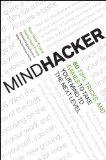
Mindhacker: 60 Tips, Tricks, and Games to Take Your Mind to the Next Level by Ron Hale-Evans and Marty Hale-Evans (Wiley, 2011)
(amazon.co.uk – 19 Sep)
Book description from the publisher:
Compelling tips and tricks to improve your mental skills
Don’t you wish you were just a little smarter? Ron and Marty Hale-Evans can help with a vast array of witty, practical techniques that tune your brain to peak performance. Founded in current research, Mindhacker features 60 tips, tricks, and games to develop your mental potential. This accessible compilation helps improve memory, accelerate learning, manage time, spark creativity, hone math and logic skills, communicate better, think more clearly, and keep your mind strong and flexible.
Reveals how to expand vocabulary and knowledge with Google, a voice recorder, and an MP3 player set on shuffle
Explains ways to annotate books in useful new ways that customize them to your needs
Uncovers tips for measuring and managing time better with new kinds of clocks and calendars
Details how to roll dice in your head
Teaches you how to avoid common, but potentially costly, errors in thinking
Encourages you to change habits and tastes to spark creativity and make life more interesting
The book explains how each technique works, and then tells how to use it in practical, everyday situations. Train daily with Mindhacker, and you’ll have the mental muscle to work and play like a champion.
Ron Hale-Evans’s previous book is Mind Performance Hacks: Tips & Tools for Overclocking Your Brain (2006).
See also: Google Books preview
Comments (0)
- mind,new books,psychology
August 26, 2011

So Much, So Fast, So Little Time: Coming to Terms with Rapid Change and Its Consequences by Michael St Clair (Praeger, 2011)
(amazon.co.uk)
Book description from the publisher:
Twenty-first-century technology opens up fabulous opportunities, but also changes how we relate to each other and warps our sense of time, reality, duty, and privacy. Technologies and time-saving devices make everything happen faster, with the result that we feel busier than ever before. “Free time” seems in danger of extinction. So Much, So Fast, So Little Time: Coming to Terms with Rapid Change and Its Consequences provides fascinating insights about how our changing world is changing our families and our personal relationships; how we travel, behave as consumers, and communicate; and how we entertain ourselves and deal with our anxieties.
Written in a popular, accessible style, this book describes seven areas of significant societal change, providing concrete examples and engaging stories to illustrate how drastically our right-now mindset has shifted our perception and experience of the world. In the last chapter, the author makes some practical suggestions on how to take thoughtful action to respond to the onslaught of inevitable change.
See also: Google Books preview
Comments (0)
- culture,new books
August 24, 2011
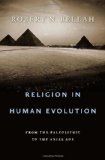
Noted sociologist Robert N. Bellah’s new book is Religion in Human Evolution: From the Paleolithic to the Axial Age (Belknap Press of Harvard, 2011)
(amazon.co.uk – 9 Sep)
Book description from the publisher:
Religion in Human Evolution is a work of extraordinary ambition—a wide-ranging, nuanced probing of our biological past to discover the kinds of lives that human beings have most often imagined were worth living. It offers what is frequently seen as a forbidden theory of the origin of religion that goes deep into evolution, especially but not exclusively cultural evolution.
How did our early ancestors transcend the quotidian demands of everyday existence to embrace an alternative reality that called into question the very meaning of their daily struggle? Robert Bellah, one of the leading sociologists of our time, identifies a range of cultural capacities, such as communal dancing, storytelling, and theorizing, whose emergence made this religious development possible. Deploying the latest findings in biology, cognitive science, and evolutionary psychology, he traces the expansion of these cultural capacities from the Paleolithic to the Axial Age (roughly, the first millennium BCE), when individuals and groups in the Old World challenged the norms and beliefs of class societies ruled by kings and aristocracies. These religious prophets and renouncers never succeeded in founding their alternative utopias, but they left a heritage of criticism that would not be quenched.?Show More
Bellah’s treatment of the four great civilizations of the Axial Age—in ancient Israel, Greece, China, and India—shows all existing religions, both prophetic and mystic, to be rooted in the evolutionary story he tells. Religion in Human Evolution answers the call for a critical history of religion grounded in the full range of human constraints and possibilities.
See also: Author website
Google Books preview:
Comments (0)
- culture,new books