[ View menu ]

Archive for 'new books'

new book – ‘Bounded Thinking: Intellectual Virtues for Limited Agents’ by Adam Morton

December 30, 2012
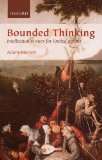
Bounded Thinking

Bounded Thinking: Intellectual virtues for Limited Agents by Adam Morton (Oxford University Press, USA, 2012)

(amazon.co.uk)
 

Book description from the publisher:

Bounded Thinking offers a new account of the virtues of limitation management: intellectual virtues of adapting to the fact that we cannot solve many problems that we can easily describe. Adam Morton argues that we do give one another guidance on managing our limitations, but that this has to be in terms of virtues and not of rules, and in terms of success–knowledge and accomplishment–rather than rationality. He establishes a taxonomy of intellectual virtues, which includes ‘paradoxical virtues’ that sound like vices, such as the virtue of ignoring evidence and the virtue of not thinking too hard. There are also virtues of not planning ahead, in that some forms of such planning require present knowledge of one’s future knowledge that is arguably impossible. A person’s best response to many problems depends not on the most rationally promising solution to solving them but on the most likely route to success given the profile of intellectual virtues that the person has and lacks. Morton illustrates his argument with discussions of several paradoxes and conundra. He closes the book with a discussion of intelligence and rationality, and argues that both have very limited usefulness in the evaluation of who will make progress on which problems.

Google Books preview:
Comments (0) - new books,philosophy of mind

new book – ‘How to Stay Sane (School of Life)’ by Philippa Perry

December 28, 2012

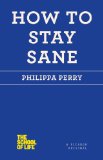
How to Stay Sane

How to Stay Sane (School of Life) by Philippa Perry (Picador, 2012)

(kindle ed.), (amazon.co.uk)

Book description from the publisher:

One of The Economist’s Best Books of 2012

Everyone accepts the importance of physical health; isn’t it just as important to aim for the mental equivalent? Philippa Perry has come to the rescue with How to Stay Sane — a maintenance manual for the mind.

Years of working as a psychotherapist showed Philippa Perry what approaches produced positive change in her clients and how best to maintain good mental health. In How to Stay Sane, she has taken these principles and applied them to self-help. Using ideas from neuroscience and sound psychological theory, she shows us how to better understand ourselves. Her idea is that if we know how our minds form and develop, we are less at the mercy of unknown unconscious processes. In this way, we can learn to be the master of our feelings and not their slave.

This is a smart, pithy, readable book that everyone with even a passing interest in their psychological health will find useful.

Google Books preview:

See also: School of Life website

Comments (0) - mind,new books,psychology

new book – ‘Happiness for Humans’ by Daniel C. Russell

December 8, 2012

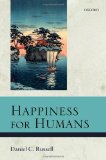
Happiness for Humans

Happiness for Humans by Daniel C. Russell (Oxford University Press, USA, 2012)

(amazon.co.uk)

Book description from the publisher:

In Happiness for Humans, Daniel C. Russell takes a fresh look at happiness from a practical perspective: the perspective of someone trying to solve the wonderful problem of how to give himself a good life. From this perspective, “happiness” is the name of a solution to that problem for practical deliberation. Russell’s approach to happiness falls within a tradition that reaches back to ancient Greek and Roman philosophers–a tradition now called “eudaimonism.” Beginning with Aristotle’s seminal discussion of the role of happiness in practical reasoning, Russell asks what sort of good happiness would have to be in order to play the role in our practical economies that it actually does play. Looking at happiness from this perspective, Russell argues that happiness is a life of activity, with three main features: it is acting for the sake of ends we can live for, and living for them wisely; it is fulfilling for us, both as humans and as unique individuals; and it is inextricable from our connections with the particular persons, pursuits, and places that make us who we are. By returning to this ancient perspective on happiness, Russell finds new directions for contemporary thought about the good lives we want for ourselves.

Google Books preview:

See also: Author’s website

Comments (0) - happiness,new books

new book – ‘Why Humans Like to Cry: The Evolutionary Origins of Tragedy’ by Michael Trimble

November 28, 2012

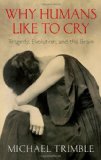
Why Humans Like to Cry

Why Humans Like to Cry: The Evolutionary Origins of Tragedy by Michael Trimble (Oxford University Press, USA, 2012)

(kindle ed.), (amazon.co.uk)

Book description from the publisher:

Human beings are the only species who cry for emotional reasons. We weep at tragedies both in our own lives and in the lives of others–remarkably, we even cry over fictional characters in film, opera, novels, and theatre. But why is weeping unique to humanity? What is different about the structure of our brains that sets us apart from all other animals? When on our evolutionary journey did we first recognize the tragedy of life? When did our early ancestors first cry?

In this fascinating volume, neurologist Michael Trimble offers a wide-ranging discussion of emotional crying, looking at its physiology as well as its evolutionary past. To shed light on why crying is uniquely human, Trimble offers an insightful account of the neuroanatomy of the human brain, highlighting differences from those of other primates, especially with regards to the representation of emotion and the circuitry related to the release of tears. He also looks at the epidemiology of crying (who cries, where, and when) and he discusses why people often feel good after crying and why we have developed art forms–most powerfully, music–that move us to tears. Throughout, Trimble weaves a discussion of Nietzsche’s Birth of Tragedy, exploring the origin of Tragedy as an art form, and using the images of Apollo and Dionysus as representative of biological and cognitive forces which are integral to the behavior and thinking of mankind. Finally, Trimble reveals that our emotional responses to tragedy–and crying for emotional reasons–have evolved over several millions of years.

The insights found here shed much light on an enigmatic part of our humanity. The book offers a profound glimpse into the human heart as well as deep insight into the role of art in our emotional lives.

Comments (0) - culture,human evolution,new books,psychology

new book – ‘Antifragile: Things That Gain from Disorder’ by Nassim Nicholas Taleb

November 27, 2012

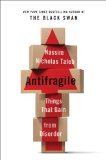
Antifragile

Antifragile: Things That Gain from Disorder by Nassim Nicholas Taleb (Random House, 2012)

(kindle ed.), (amazon.co.uk)

Book description from the publisher:

Nassim Nicholas Taleb, the bestselling author of The Black Swan and one of the foremost thinkers of our time, reveals how to thrive in an uncertain world.

Just as human bones get stronger when subjected to stress and tension, and rumors or riots intensify when someone tries to repress them, many things in life benefit from stress, disorder, volatility, and turmoil. What Taleb has identified and calls “antifragile” is that category of things that not only gain from chaos but need it in order to survive and flourish.

In The Black Swan, Taleb showed us that highly improbable and unpredictable events underlie almost everything about our world. In Antifragile, Taleb stands uncertainty on its head, making it desirable, even necessary, and proposes that things be built in an antifragile manner. The antifragile is beyond the resilient or robust. The resilient resists shocks and stays the same; the antifragile gets better and better.

Furthermore, the antifragile is immune to prediction errors and protected from adverse events. Why is the city-state better than the nation-state, why is debt bad for you, and why is what we call “efficient” not efficient at all? Why do government responses and social policies protect the strong and hurt the weak? Why should you write your resignation letter before even starting on the job? How did the sinking of the Titanic save lives? The book spans innovation by trial and error, life decisions, politics, urban planning, war, personal finance, economic systems, and medicine. And throughout, in addition to the street wisdom of Fat Tony of Brooklyn, the voices and recipes of ancient wisdom, from Roman, Greek, Semitic, and medieval sources, are loud and clear.

Antifragile is a blueprint for living in a Black Swan world.

Erudite, witty, and iconoclastic, Taleb’s message is revolutionary: The antifragile, and only the antifragile, will make it.

See also: Taleb’s website, including a “freely available technical companion” Metaprobability, Convexity & Heuristics

Comments (0) - new books