[ View menu ]

Archive for 'new books'

new book – ‘Intuition Pumps and Other Tools for Thinking’ by Daniel C. Dennett

April 30, 2013
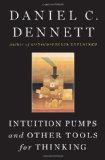
Intuition Pumps and Other Tools for Thinking

Intuition Pumps And Other Tools for Thinking by Daniel C. Dennett (W.W. Norton & Co., 2013)

(kindle ed.), (amazon.co.uk)

Book description from the publisher:

One of the world’s leading philosophers offers aspiring thinkers his personal trove of mind-stretching thought experiments.

Over a storied career, Daniel C. Dennett has engaged questions about science and the workings of the mind. His answers have combined rigorous argument with strong empirical grounding. And a lot of fun.Intuition Pumps and Other Tools for Thinking offers seventy-seven of Dennett’s most successful “imagination-extenders and focus-holders” meant to guide you through some of life’s most treacherous subject matter: evolution, meaning, mind, and free will. With patience and wit, Dennett deftly deploys his thinking tools to gain traction on these thorny issues while offering readers insight into how and why each tool was built.

Alongside well-known favorites like Occam’s Razor and reductio ad absurdum lie thrilling descriptions of Dennett’s own creations: Trapped in the Robot Control Room, Beware of the Prime Mammal, and The Wandering Two-Bitser. Ranging across disciplines as diverse as psychology, biology, computer science, and physics, Dennett’s tools embrace in equal measure light-heartedness and accessibility as they welcome uninitiated and seasoned readers alike. As always, his goal remains to teach you how to “think reliably and even gracefully about really hard questions.”

A sweeping work of intellectual seriousness that’s also studded with impish delights, Intuition Pumps offers intrepid thinkers—in all walks of life—delicious opportunities to explore their pet ideas with new powers.

Google Books preview:
Comments (0) - consciousness,new books

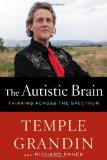
new book – ‘The Autistic Brain: Thinking Across the Spectrum’ by Temple Grandin and Richard Panek

Autistic Brain

The Autistic Brain: Thinking Across the Spectrum by Temple Grandin and Richard Panek (Houghton Mifflin Harcourt, 2013)

(kindle ed.), (amazon.co.uk)

Book description from the publisher:

A cutting-edge account of the latest science of autism, from the best-selling author and advocate

When Temple Grandin was born in 1947, autism had only just been named. Today it is more prevalent than ever, with one in 88 children diagnosed on the spectrum. And our thinking about it has undergone a transformation in her lifetime: Autism studies have moved from the realm of psychology to neurology and genetics, and there is far more hope today than ever before thanks to groundbreaking new research into causes and treatments. Now Temple Grandin reports from the forefront of autism science, bringing her singular perspective to a thrilling journey into the heart of the autism revolution.

Weaving her own experience with remarkable new discoveries, Grandin introduces the neuroimaging advances and genetic research that link brain science to behavior, even sharing her own brain scan to show us which anomalies might explain common symptoms. We meet the scientists and self-advocates who are exploring innovative theories of what causes autism and how we can diagnose and best treat it. Grandin also highlights long-ignored sensory problems and the transformative effects we can have by treating autism symptom by symptom, rather than with an umbrella diagnosis. Most exciting, she argues that raising and educating kids on the spectrum isn’t just a matter of focusing on their weaknesses; in the science that reveals their long-overlooked strengths she shows us new ways to foster their unique contributions.

From the “aspies” in Silicon Valley to the five-year-old without language, Grandin understands the true meaning of the word spectrum. The Autistic Brain is essential reading from the most respected and beloved voices in the field.

Google Books preview:

Comments (0) - new books,psychology

new release on kindle – ‘Use Philosophy to Be Happier – 30 Steps to Perfect the Art of Living’ by Mark Vernon

April 27, 2013

(Paperback ed. due in August.)

(amazon.co.uk)

Book description from the publisher:

Happiness. We all want it – but how can we get it? Author Mark Vernon has solved the problem by collecting the wisdom of the greatest minds in history and making their thinking on the important things in life accessible and, above all, practical. Full of everyday examples to make sometimes high-blown philosophy entertaining and relevant, this book shows you how you can crack the secret to living The Good Life.

Comments (0) - happiness,new books

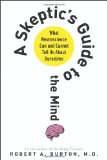
new book – ‘A Skeptic’s Guide to the Mind: What Neuroscience Can and Cannot Tell Us About Ourselves’ by Robert Burton

April 23, 2013

Skeptic's Guide to the Mind

A Skeptic’s Guide to the Mind: What Neuroscience Can and Cannot Tell Us About Ourselves by Robert Burton (St Martin’s Press, 2013)

(kindle ed.), (amazon.co.uk)

Book description from the publisher:

What if our soundest, most reasonable judgments are beyond our control?

Despite 2500 years of contemplation by the world’s greatest minds and the more recent phenomenal advances in basic neuroscience, neither neuroscientists nor philosophers have a decent understanding of what the mind is or how it works. The gap between what the brain does and the mind experiences remains uncharted territory. Nevertheless, with powerful new tools such as the fMRI scan, neuroscience has become the de facto mode of explanation of behavior. Neuroscientists tell us why we prefer Coke to Pepsi, and the media trumpets headlines such as “Possible site of free will found in brain.” Or: “Bad behavior down to genes, not poor parenting.”

Robert Burton believes that while some neuroscience observations are real advances, others are overreaching, unwarranted, wrong-headed, self-serving, or just plain ridiculous, and often with the potential for catastrophic personal and social consequences. In A Skeptic’s Guide to the Mind, he brings together clinical observations, practical thought experiments, personal anecdotes, and cutting-edge neuroscience to decipher what neuroscience can tell us – and where it falls woefully short. At the same time, he offers a new vision of how to think about what the mind might be and how it works.

A Skeptic’s Guide to the Mind is a critical, startling, and expansive journey into the mysteries of the brain and what makes us human.

See also: Author’s website

Comments (0) - cognitive science,mind,new books

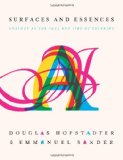
new book – ‘Surfaces and Essences: Analogy as the Fuel and Fire of Thinking’ by Douglas Hofstadter and Emmanuel Sander

Surfaces and Essences

Surfaces and Essences: Analogy as the Fuel and Fire of Thinking by Douglas Hofstadter and Emmanuel Sander (Basic Books, 2013)

(kindle ed.), (amazon.co.uk)

Book description from the publisher:

Analogy is the core of all thinking. This is the simple but unorthodox premise that Pulitzer Prize–winning author Douglas Hofstadter and French psychologist Emmanuel Sander defend in their new work. Hofstadter has been grappling with the mysteries of human thought for over thirty years. Now, with his trademark wit and special talent for making complex ideas vivid, he has partnered with Sander to put forth a highly novel perspective on cognition.

We are constantly faced with a swirling and intermingling multitude of ill-defined situations. Our brain’s job is to try to make sense of this unpredictable, swarming chaos of stimuli. How does it do so? The ceaseless hail of input triggers analogies galore, helping us to pinpoint the essence of what is going on. Often this means the spontaneous evocation of words, sometimes idioms, sometimes the triggering of nameless, long-buried memories.

Why did two-year-old Camille proudly exclaim, “I undressed the banana!”? Why do people who hear a story often blurt out, “Exactly the same thing happened to me!” when it was a completely different event? How do we recognize an aggressive driver from a split-second glance in our rearview mirror? What in a friend’s remark triggers the offhand reply, “That’s just sour grapes”? What did Albert Einstein see that made him suspect that light consists of particles when a century of research had driven the final nail in the coffin of that long-dead idea?

The answer to all these questions, of course, is analogy-making—the meat and potatoes, the heart and soul, the fuel and fire, the gist and the crux, the lifeblood and the wellsprings of thought. Analogy-making, far from happening at rare intervals, occurs at all moments, defining thinking from top to toe, from the tiniest and most fleeting thoughts to the most creative scientific insights.

Like Gödel, Escher, Bach before it, Surfaces and Essences will profoundly enrich our understanding of our own minds. By plunging the reader into an extraordinary variety of colorful situations involving language, thought, and memory, by revealing bit by bit the constantly churning cognitive mechanisms normally completely hidden from view, and by discovering in them one central, invariant core—the incessant, unconscious quest for strong analogical links to past experiences—this book puts forth a radical and deeply surprising new vision of the act of thinking.

Google Books preview:

See also: Book website

Comments (0) - cognitive science,language,new books