[ View menu ]

Archive for 'new books'

new book – ‘How to Build a Brain: A Neural Architecture for Biological Cognition’ by Chris Eliasmith

June 7, 2013
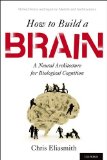
How to Build a Brain

How to Build a Brain: A Neural Architecture for Biological Cognition (Oxford Series on Cognitive Models and Architectures) by Chris Eliasmith (Oxford University Press, USA, 2013)

(amazon.co.uk)

Book description from the publisher:

One goal of researchers in neuroscience, psychology, and artificial intelligence is to build theoretical models that are able to explain the flexibility and adaptiveness of biological systems. How to Build a Brain provides a detailed guided exploration of a new cognitive architecture that takes biological detail seriously, while addressing cognitive phenomena. The Semantic Pointer Architecture (SPA) introduced in this book provides a set of tools for constructing a wide range of biologically constrained perceptual, cognitive, and motor models.

Examples of such models are provided, and they are shown to explain a wide range of data including single cell recordings, neural population activity, reaction times, error rates, choice behavior, and fMRI signals. Each of these models introduces a major feature of biological cognition addressed in the book, including semantics, syntax, control, learning, and memory. These models are not introduced as independent considerations of brain function, but instead integrated to give rise to what is currently the world’s largest functional brain model.

The last half of this book compares the Semantic Pointer Architecture with the current state-of-the-art, addressing issues of theory construction in the behavioral sciences, semantic compositionality, and scalability, among other considerations. The book concludes with a discussion of conceptual challenges raised by this architecture, and identifies several outstanding challenges for this, and other, cognitive architectures.

Along the way, the book considers neural coding, concept representation, neural dynamics, working memory, neuroanatomy, reinforcement learning, and spike-timing dependent plasticity. The book includes 8 detailed, hands-on tutorials exploiting the free Nengo neural simulation environment, providing practical experience with the concepts and models presented throughout.

Author profile video:

Comments (0) - cognitive science,new books

new book – ‘Denial: Self-Deception, False Beliefs, and the Origins of the Human Mind’ by Ajit Varki and Danny Brower

June 4, 2013

Denial

Denial: Self-Deception, False Beliefs, and the Origins of the Human Mind by Ajit Varki and Danny Brower (Twelve, 2013)

(kindle ed.), (amazon.co.uk)

Book description from the publisher:

The history of science abounds with momentous theories that disrupted conventional wisdom and yet were eventually proven true. Ajit Varki and Danny Brower’s “Mind over Reality” theory is poised to be one such idea-a concept that runs counter to commonly-held notions about human evolution but that may hold the key to understanding why humans evolved as we did, leaving all other related species far behind.

At a chance meeting in 2005, Brower, a geneticist, posed an unusual idea to Varki that he believed could explain the origins of human uniqueness among the world’s species: Why is there no humanlike elephant or humanlike dolphin, despite millions of years of evolutionary opportunity? Why is it that humans alone can understand the minds of others?

Haunted by their encounter, Varki tried years later to contact Brower only to discover that he had died unexpectedly. Inspired by an incomplete manuscript Brower left behind, DENIAL presents a radical new theory on the origins of our species. It was not, the authors argue, a biological leap that set humanity apart from other species, but a psychological one: namely, the uniquely human ability to deny reality in the face of inarguable evidence-including the willful ignorance of our own inevitable deaths.

The awareness of our own mortality could have caused anxieties that resulted in our avoiding the risks of competing to procreate-an evolutionary dead-end. Humans therefore needed to evolve a mechanism for overcoming this hurdle: the denial of reality.

As a consequence of this evolutionary quirk we now deny any aspects of reality that are not to our liking-we smoke cigarettes, eat unhealthy foods, and avoid exercise, knowing these habits are a prescription for an early death. And so what has worked to establish our species could be our undoing if we continue to deny the consequences of unrealistic approaches to everything from personal health to financial risk-taking to climate change. On the other hand reality-denial affords us many valuable attributes, such as optimism, confidence, and courage in the face of long odds.

Presented in homage to Brower’s original thinking, DENIAL offers a powerful warning about the dangers inherent in our remarkable ability to ignore reality-a gift that will either lead to our downfall, or continue to be our greatest asset.

Comments (3) - human evolution,mind,new books,psychology,Uncategorized

new book – ‘Reflections of a Metaphysical Flaneur and Other Essays’ by Raymond Tallis

May 31, 2013

Reflections of a Metaphysical Flaneur

Reflections of a Metaphysical Flaneur and Other Essays by Raymond Tallis (Acumen, 2013)

(amazon.co.uk)

Book description from the publisher:

In the title essay of “Reflections of a Metaphysical Flaneur”, Raymond Tallis uses the motif of the stroll, the amble, to connect a series of meditations on the freedoms that only humans possess. In subsequent essays, the flaneur thinks about his brain, his relationship to the rest of the animal kingdom, his profession of medicine and about the physical world and the claims of physical science to have rendered philosophical reflection obsolete. The book is a continuation of Tallis’s endeavours to elaborate a vision of humanity that rejects religious myths while not succumbing to scientism or any other form of naturalism. Written with the author’s customary intellectual energy and vigour these essays provoke, stimulate and challenge us to think in new ways.

CONTENTS:
Introduction
Reflections of a Metaphysical Flâneur
Part I: Brains, Persons and Beasts
1. Am I my Brain?
2. Was Schubert a Musical Brain?
3. Wickedness and Wit: Is it all in the brain?
4. Are Conscious Machines Possible?
5. David Chalmers’s Unsuccessful Search for the Conscious Mind
6. A Conversation with My Neighbour
7. Silk
Part II: Philosophy and Physics
8. Should We Just Shut Up and Calculate?
9. You Chemical Scum, You
10. Did Time Begin with a Bang?
11. A Hasty Report from a Tearing Hurry
Part III: Philosophy and Physic
12. Medical Ethics in the Real Mess of the Real World
13. Some Reflections on Caring and Not Caring
14. Coinages of the Mind: Hallucinations
15. Becoming the Prisoners of Our Free Choices
16. The Right to an Assisted Death
Epilogue: And so to Bed

See also: Author’s website

Comments (0) - new books,philosophy of mind

new book – ‘The Peripheral Mind: Philosophy of Mind and the Peripheral Nervous System’ by Istvan Aranyosi

May 29, 2013

Peripheral Mind

The Peripheral Mind: Philosophy of Mind and the Peripheral Nervous System by István Aranyosi (Oxford University Press, USA, 2013)

(amazon.co.uk – Aug 2013)

Book description from the publisher:

The Peripheral Mind introduces a novel approach to a wide range of issues in the philosophy of mind by shifting the focus of analysis from the brain to the Peripheral Nervous System (PNS). Contemporary philosophy of mind has neglected the potential significance of the PNS and has implicitly assumed that, ultimately, sensory and perceptual experience comes together in the brain. István Aranyosi proposes a philosophical hypothesis according to which peripheral processes are considered as constitutive of sensory states rather than merely as causal contributors to them. Part of the motivation for the project is explained in the autobiographical opening chapter, which describes the author’s subjective experiences with severe peripheral nerve damage.

Although Aranyosi’s approach could be classified as part of the current “embodied mind” paradigm in the philosophy of mind and cognitive neuroscience, this is the first time that notions like “embodiment” and “body” in general are replaced by the more focused concept of the PNS. Aranyosi puts the hypothesis to the test and offers novel solutions to puzzles related to physicalism, functionalism, mental content, embodiment, the extended mind hypothesis, tactile-proprioceptive illusions, as well as to some problems in neuroethics, such as abortion and requests for amputation of healthy body parts. The diversity of the volume’s methodology–which results from a combination of conceptual analysis, discussion of neuroscientific data, philosophical speculation, and first-person phenomenological accounts–makes the book both engaging and highly informative.

Google Books preview:

Comments (0) - new books,philosophy of mind

new book – ‘Time Warped: Unlocking the Mysteries of Time Perception’ by Claudia Hammond

May 28, 2013

Time Warped

Time Warped: Unlocking the Mysteries of Time Perception by Claudia Hammond (Harper Perennial, 2013)

(kindle ed.), (amazon.co.uk)

Book description from the publisher:

Drawing on the latest research from the fields of psychology, neuroscience, and biology, writer and broadcaster Claudia Hammond explores the mysteries of our perception of time in her book Time Warped.

Why does life seem to speed up as we get older? Why does the clock in your head move at a different speed from the one on the wall? Why is it almost impossible to go a whole day without checking your watch? Is it possible to retrain our brains and improve our relationship with it?

In Time Warped, Claudia Hammond offers insight into how to manage our time more efficiently, how to speed time up and slow it down at will, how to plan for the future with more accuracy, and she teaches how to use the warping of time to our own benefit.

Google books preview (Canadian edition):

See also: Author’s website

Comments (0) - new books,psychology