July 16, 2013
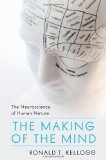
The Making of the Mind: The Neuroscience of Human Nature by Ronald T. Kellogg (Prometheus Books, 2013)
(kindle ed.), (amazon.co.uk)
Book description from the publisher:
Using the findings of recent neuroscience, a psychologist reveals what sets humans apart from all other species, offering a fascinating exploration of our marvelous and sometimes frightening cognitive abilities and potentials.
According to human genome research, there is a remarkable degree of overlap in the DNA of humans and chimpanzees. So what accounts for the rapid development of human culture throughout history and the extraordinary creative and destructive aspects of human behavior that make us so different from our primate cousins?
Kellogg explores in detail five distinctive parts of human cognition. These are the executive functions of working memory; a social intelligence with “mind-reading” abilities; a capacity for symbolic thought and language; an inner voice that interprets conscious experiences by making causal inferences; and a means for mental time travel to past events and imagined futures.
He argues that it is the interaction of these five components that results in our uniquely human mind. This is especially true for three quintessentially human endeavors-morality, spirituality, and literacy, which can be understood only in light of the whole ensemble’s interactive effects. Kellogg recaps the story of the human mind and speculates on its future. How might the Internet, 24/7 television, and smart phones affect the way the mind functions?
Comments (0)
- cognitive science,mind,new books
July 13, 2013

The Joy of Pain: Schadenfreude and the Dark Side of Human Nature by Richard H. Smith (Oxford University Press, USA, 2013)
(kindle ed.), (amazon.co.uk)
Book description from the publisher:
Few people will easily admit to taking pleasure in the misfortunes of others. But who doesn’t enjoy it when an arrogant but untalented contestant is humiliated on American Idol, or when the embarrassing vice of a self-righteous politician is exposed, or even when an envied friend suffers a small setback? The truth is that joy in someone else’s pain-known by the German word schadenfreude–permeates our society.
In The Joy of Pain, psychologist Richard Smith, one of the world’s foremost authorities on envy and shame, sheds much light on a feeling we dare not admit. Smith argues that schadenfreude is a natural human emotion, one worth taking a closer look at, as it reveals much about who we are as human beings. We have a passion for justice. Sometimes, schadenfreude can feel like getting one’s revenge, when the suffering person has previously harmed us. But most of us are also motivated to feel good about ourselves, Smith notes, and look for ways to maintain a positive sense of self. One common way to do this is to compare ourselves to others and find areas where we are better. Similarly, the downfall of others–especially when they have seemed superior to us–can lead to a boost in our self-esteem, a lessening of feelings of inferiority. This is often at the root of schadenfreude. As the author points out, most instances of schadenfreude are harmless, on par with the pleasures of light gossip. Yet we must also be mindful that envy can motivate, without full awareness, the engineering of the misfortune we delight in. And envy-induced aggression can take us into dark territory indeed, as Smith shows as he examines the role of envy and schadenfreude in the Nazi persecution of the Jews.
Filled with engaging examples of schadenfreude, from popular reality shows to the Duke-Kentucky basketball rivalry, The Joy of Pain provides an intriguing glimpse into a hidden corner of the human psyche.
Comments (0)
- new books,psychology
July 10, 2013
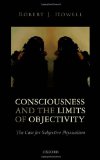
Consciousness and the Limits of Objectivity: The Case for Subjective Physicalism by Robert J. Howell (Oxford University Press, USA, 2013)
(amazon.co.uk)
Book description from the publisher:
In Consciousness and the Limits of Objectivity Robert J. Howell argues that the options in the debates about consciousness and the mind-body problem are more limited than many philosophers have appreciated. Unless one takes a hard-line stance, which either denies the data provided by consciousness or makes a leap of faith about future discoveries, one must admit that no objective picture of our world can be complete. Howell argues, however, that this is consistent with physicalism, contrary to received wisdom. After developing a novel, neo-Cartesian notion of the physical, followed by a careful consideration of the three major anti-materialist arguments–Black’s ‘Presentation Problem’, Jackson’s Knowledge Argument, and Chalmers’ Conceivability Argument–Howell proposes a ‘subjective physicalism’ which gives the data of consciousness their due, while retaining the advantages of a monistic, physical ontology.
Google Books preview:
See also: Author’s website
Comments (0)
- consciousness,new books
July 8, 2013
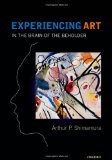
Experiencing Art: In the Brain of the Beholder by Arthur Shimamura (Oxford University Press, USA, 2013)
(amazon.co.uk)
Book description from the publisher:
How do we appreciate a work of art? Why do we like some artworks but not others? Is there no accounting for taste? Awarded a Guggenheim Fellowship to explore connections between art, mind, and brain, Shimamura considers how we experience art. In a thoughtful and entertaining manner, the book explores how the brain interprets art by engaging our sensations, thoughts, and emotions. It describes interesting findings from psychological and brain sciences as a way to understand our aesthetic response to art.
Beauty, disgust, surprise, anger, sadness, horror, and a myriad of other emotions can occur as we experience art. Some artworks may generate such feelings rather quickly, while others depend on thought and knowledge. Our response to art depends largely on what we know–from everyday knowledge about the world, from our cultural backgrounds, and from personal experience. Filled with artworks from many traditions and time points, “Experiencing Art” offers insightful ways of broadening one’s approach and appreciation of art.
Google Books preview:
See also: Author’s website
Comments (0)
- cognitive science,culture,new books
June 28, 2013
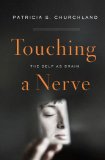
Touching a Nerve: The Self as Brain by Patricia S. Churchland (W.W. Norton & Co., 2013)
(kindle ed.), (amazon.co.uk)
Book description from the publisher:
A trailblazing philosopher’s exploration of the latest brain science—and its ethical and practical implications.
What happens when we accept that everything we feel and think stems not from an immaterial spirit but from electrical and chemical activity in our brains? In this thought-provoking narrative—drawn from professional expertise as well as personal life experiences—trailblazing neurophilosopher Patricia S. Churchland grounds the philosophy of mind in the essential ingredients of biology. She reflects with humor on how she came to harmonize science and philosophy, the mind and the brain, abstract ideals and daily life. Offering lucid explanations of the neural workings that underlie identity, she reveals how the latest research into consciousness, memory, and free will can help us reexamine enduring philosophical, ethical, and spiritual questions: What shapes our personalities? How do we account for near-death experiences? How do we make decisions? And why do we feel empathy for others? Recent scientific discoveries also provide insights into a fascinating range of real-world dilemmas—for example, whether an adolescent can be held responsible for his actions and whether a patient in a coma can be considered a self.
Churchland appreciates that the brain-based understanding of the mind can unnerve even our greatest thinkers. At a conference she attended, a prominent philosopher cried out, “I hate the brain; I hate the brain!” But as Churchland shows, he need not feel this way. Accepting that our brains are the basis of who we are liberates us from the shackles of superstition. It allows us to take ourselves seriously as a product of evolved mechanisms, past experiences, and social influences. And it gives us hope that we can fix some grievous conditions, and when we cannot, we can at least understand them with compassion.
Google Books preview:
Comments (0)
- cognitive science,consciousness,new books,self