[ View menu ]

Archive for 'new books'

new book – ‘Change: What Really Leads to Lasting Personal Transformation’ by Jeffrey A. Kottler

October 4, 2013
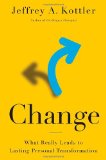
Change

Change: What Really Leads to Lasting Personal Transformation by Jeffrey A. Kottler (Oxford University Press, USA, 2013)

(amazon.co.uk)

Book description from the publisher:

Change is often a mystery, one that baffles doctors, therapists, teachers, coaches, parents-and especially those of us who struggle to alter bad habits or simply make lasting improvements in our lives. Why do we suddenly change for the better after years of failed efforts? Why do some of us never escape our self-destructive behaviors, even when we desperately want to? What is it that most reliably and effectively produces growth, learning and development that persist over time?

In this vividly written volume, psychotherapist Jeffrey Kottler weaves together inspiring stories and the latest research, taking the reader on a fascinating exploration of human behavior while highlighting what does-and does not-lead to lasting change. Kottler illuminates our many efforts to change-to stop taking drugs, reduce dependencies, leave a destructive relationship, find new and more meaningful work, or adjust to a devastating accident or trauma. Readers are invited to explore key triggers such as hitting bottom, moments of clarity, the power of altruism and service, travel to new surroundings, reading or listening to stories, religious conversion, and much more. Kottler also explores why most changes don’t last and what we can do to prevent relapses.

Throughout the book, Kottler recounts stories of colleagues and patients-and even recalls episodes from his own life-often moving tales of remarkable, unexpected, and lasting transformation. He looks for instance at a young black basketball star, confined to a wheelchair for life after being shot four times, who turned his life around, becoming a scholar and a PhD.

An intriguing glimpse into the complexity of the human psyche, Change will engage anyone who has ever struggled to alter a habit, enrich relationships, recover from disappointment or failure, strive for more meaningful and productive work, deal with anxiety, loneliness, fears, stress, and depression, or transform their lives in any kind of significant way.

See also: Author’s website
Comments (0) - new books,psychology

new book – ‘Memory: Encounters with the Strange and the Familiar’ by John Scanlan

October 3, 2013

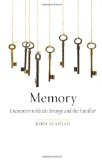
Memory

Memory: Encounters with the Strange and the Familiar by John Scanlan (Reaktion Books)

(amazon.co.uk)

Book description from the publisher:

When we think of getting older, we know we will slowly lose more and more of our memory—and with it, our sense of where we belong and how we connect to others. We might relax a little if we considered the improvements in computer data storage, which may lead us into a future when the limits of our memory become less constricting. In this book, John Scanlan explores the nature of memory and how we have come to live both with and within it, as well as what might come from memory becoming a process as simple as retrieving and reading data.

Probing the ways philosophers look at memory, Scanlan reveals that some argue that being human means having the ability to remember, to see oneself as a being in time, with a past and future. At the same time, he shows, our memories can undo our present sense of time and place by presenting us with our past lives. And in a digital age, we are immersed in a vast archive of data that not only colors our everyday experiences, but also supplies us with information on anything we might otherwise have forgotten—breaking down the distinction between the memories of the individual and the collective. Drawing on history, philosophy, and technology, Memory offers an engaging investigation of how we comprehend recollection and how memory, as a phenomenon, continually remakes everyday life.

Comments (0) - new books,philosophy of mind,psychology

new book – ‘Our Final Invention: Artificial Intelligence and the End of the Human Era’ by James Barrat

October 2, 2013

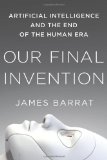
Our Final Invention

Our Final Invention: Artificial Intelligence and the End of the Human Era by James Barrat (Thomas Dunne, 2013)

(kindle ed.), (amazon.co.uk)

Book description from the publisher:

Artificial Intelligence helps choose what books you buy, what movies you see, and even who you date. It puts the “smart” in your smartphone and soon it will drive your car. It makes most of the trades on Wall Street, and controls vital energy, water, and transportation infrastructure. But Artificial Intelligence can also threaten our existence.

In as little as a decade, AI could match and then surpass human intelligence. Corporations and government agencies are pouring billions into achieving AI’s Holy Grail—human-level intelligence. Once AI has attained it, scientists argue, it will have survival drives much like our own. We may be forced to compete with a rival more cunning, more powerful, and more alien than we can imagine.

Through profiles of tech visionaries, industry watchdogs, and groundbreaking AI systems, Our Final Invention explores the perils of the heedless pursuit of advanced AI. Until now, human intelligence has had no rival. Can we coexist with beings whose intelligence dwarfs our own? And will they allow us to?

Google Books preview:

See also: Author’s website

Comments (0) - culture,human evolution,new books

new Malcolm Gladwell – ‘David and Goliath: Underdogs, Misfits, and the Art of Battling Giants’

October 1, 2013

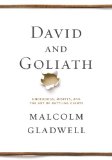
David and Goliath

David and Goliath: Underdogs, Misfits, and the Art of Battling Giants by Malcolm Gladwell (Little, Brown, 2013)

(kindle ed.), (amazon.co.uk)

Book description from the publisher:

Malcolm Gladwell, the #1 bestselling author of The Tipping Point, Blink, Outliers, and What the Dog Saw, offers his most provocative—and dazzling—book yet.

Three thousand years ago on a battlefield in ancient Palestine, a shepherd boy felled a mighty warrior with nothing more than a stone and a sling, and ever since then the names of David and Goliath have stood for battles between underdogs and giants. David’s victory was improbable and miraculous. He shouldn’t have won.

Or should he have?

In David and Goliath, Malcolm Gladwell challenges how we think about obstacles and disadvantages, offering a new interpretation of what it means to be discriminated against, or cope with a disability, or lose a parent, or attend a mediocre school, or suffer from any number of other apparent setbacks.

Gladwell begins with the real story of what happened between the giant and the shepherd boy those many years ago. From there, David and Goliath examines Northern Ireland’s Troubles, the minds of cancer researchers and civil rights leaders, murder and the high costs of revenge, and the dynamics of successful and unsuccessful classrooms—all to demonstrate how much of what is beautiful and important in the world arises from what looks like suffering and adversity.

In the tradition of Gladwell’s previous bestsellers—The Tipping Point, Blink, Outliers and What the Dog Saw—David and Goliath draws upon history, psychology, and powerful storytelling to reshape the way we think of the world around us.

TED Talk:

Comments (0) - new books,psychology

new book – ‘How Literature Plays with the Brain: The Neuroscience of Reading and Art’ by Paul B. Armstrong

September 20, 2013

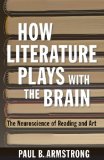
How Literature Plays with the Brain

How Literature Plays with the Brain: The Neuroscience of Reading and Art by Paul B. Armstrong (Johns Hopkins University Press, 2013)

(kindle ed.), (amazon.co.uk)

Book description from the publisher:

“Literature matters,” says Paul B. Armstrong, “for what it reveals about human experience, and the very different perspective of neuroscience on how the brain works is part of that story.” In How Literature Plays with the Brain, Armstrong examines the parallels between certain features of literary experience and functions of the brain. His central argument is that literature plays with the brain through experiences of harmony and dissonance which set in motion oppositions that are fundamental to the neurobiology of mental functioning. These oppositions negotiate basic tensions in the operation of the brain between the drive for pattern, synthesis, and constancy and the need for flexibility, adaptability, and openness to change.

The challenge, Armstrong argues, is to account for the ability of readers to find incommensurable meanings in the same text, for example, or to take pleasure in art that is harmonious or dissonant, symmetrical or distorted, unified or discontinuous and disruptive.

How Literature Plays with the Brain is the first book to use the resources of neuroscience and phenomenology to analyze aesthetic experience. For the neuroscientific community, the study suggests that different areas of research—the neurobiology of vision and reading, the brain-body interactions underlying emotions—may be connected to a variety of aesthetic and literary phenomena. For critics and students of literature, the study engages fundamental questions within the humanities: What is aesthetic experience? What happens when we read a literary work? How does the interpretation of literature relate to other ways of knowing?

Google Books preview (scroll past blank page):

See also: Author’s webpage

Comments (2) - cognitive science,culture,fiction,new books